

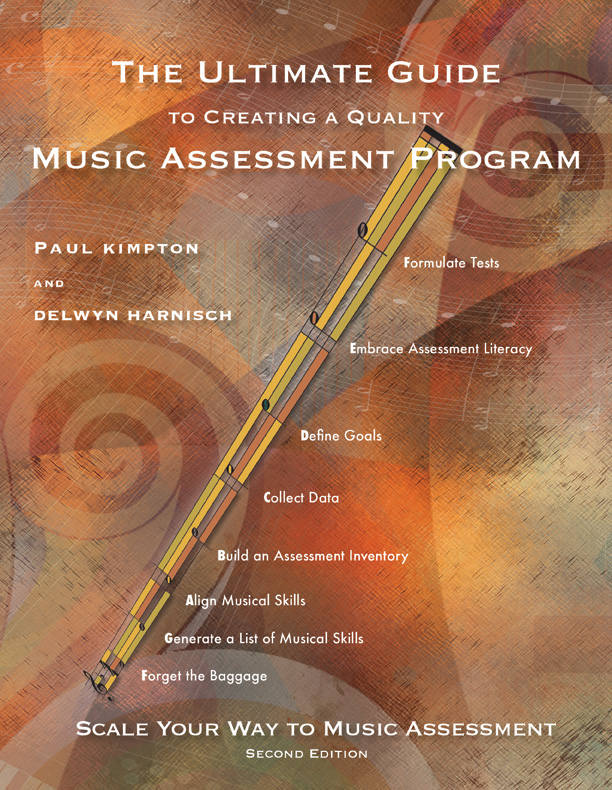
Cover Image
The Ultimate Guide to Creating a Quality Music Assessment Program
Scale Your Way to Music Assessment - Second Edition
Paul Kimpton
- SKU: GG-9542
Accompaniment - []
The Ultimate Guide to Creating a Quality Music Assessment Program is a hands-on, step-by-step action plan to use assessment to improve your teaching and your students’ performances.
This expanded Second Edition of the popular Scale Your Way to Music Assessment provides examples of how to teach student musicians at every level—elementary, middle, and high school—to become accurate and consistent assessors of musical performance. This book also describes how to meaningfully self- and peer-assess, and set goals for practicing and improving the performances of a group. The ultimate goal is to enhance learning and education through assessment.
Also included are appendices with actual written and listening tests; outlines of a testing program for band, choir, and orchestra; a glossary of terms—and more. The Ultimate Guide to Creating a Quality Music Assesement Program includes everything you'll need to develop your program.
New downloadable resources include sample data, tests for all grade levels, music examples, and reference material. The extensive range of topics in this revised edition incorporate exemplars for all grade levels of a music program, including:
Developing performance assessments
Aligning music department goals
Developing written assessments with district and school goals
Developing listening assessments
Writing course goals
Writing music tests
Helping a program realize its vision
Involving students in taking responsibility
Integrating the National Core Arts Standards for improving skills
Updating references and websites
A review of test-making software
Frequently asked questions
While reading the second edition of Scale Your Way, I was reminded of why I liked the book to begin with: lots of concrete ideas, a throrough treatment based on years of experience, an accurate and useful discussion of classroom assessment, and—most of all—it puts students in the driver's seat. The person doing the assesing does the learning. The authors' discussions in the book also have the added benefit of helping teachers develop the classroom role they want to have—coaches and cheerleaders rather than enforcers.
—Judy Arter, author, musician, and consultant for Educational Testing Service