

Mass of Holy Longing
Rob Glover, Daniel Kantor
Style: General Anthem
Series: Mass
Level: E/M
Accompaniment - ["Piano"]
The C instrument parts are also included in Bass clef.
$7.65
Lift Up Your Heads, Ye Mighty Gates - Instrument edition
Robert Farrell
Style: Concert / Festival
Level: 0
Accompaniment - []
$4.00
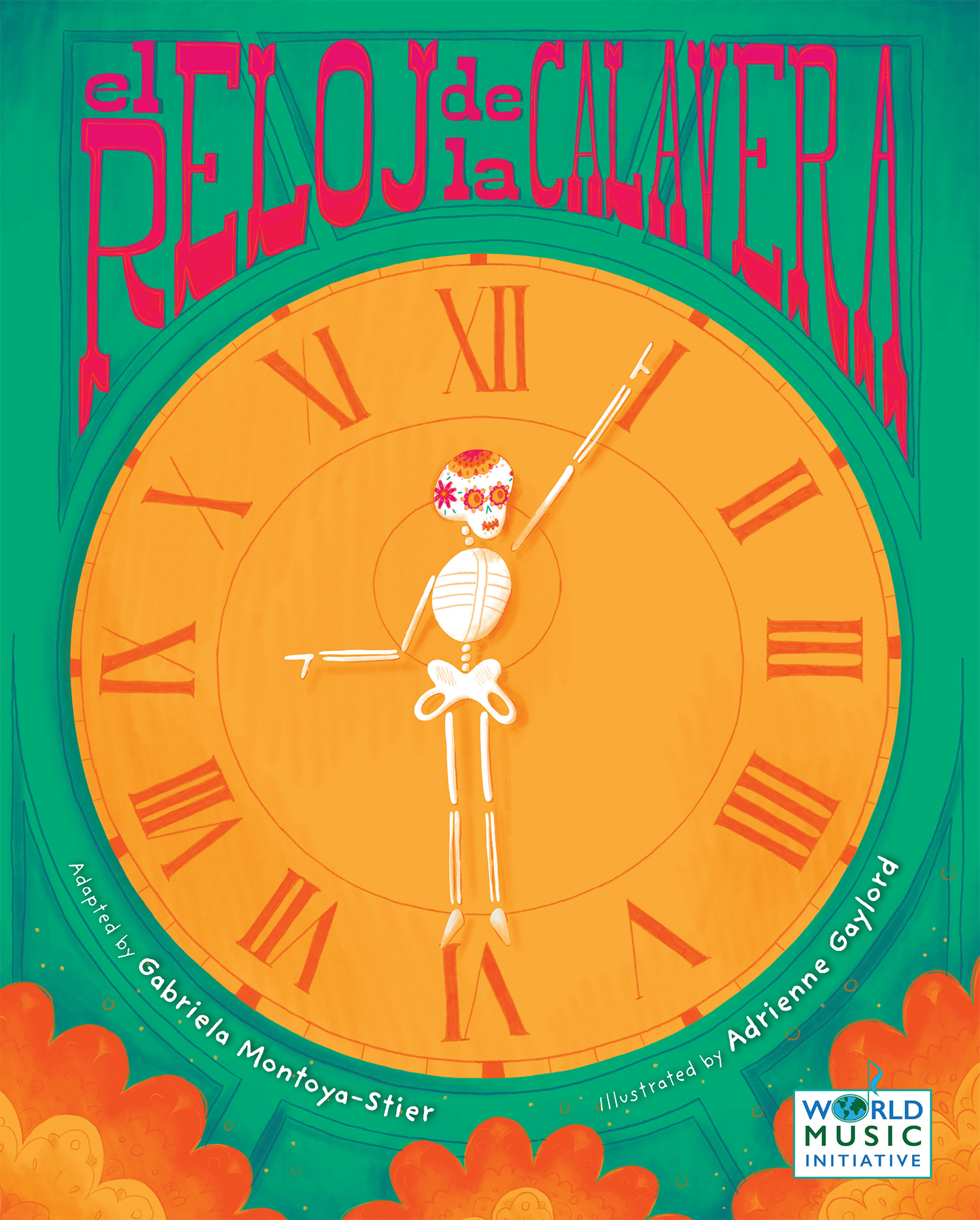
El Reloj de la Calavera (The Skeleton Clock)
Gabriela Montoya-Stier
Series: World Music Initiative
Level: 0
Accompaniment - []
Join in the festivities with this classic Mexican chant that has delighted generations of children and families!_x000D_
_x000D_
_x000D_
_x000D_
In this colorful adaptation of El Reloj de la Calavera (The Skeleton Clock), all the adventure takes place on Domingo Grande, the Sunday before DÃa de los Muertos. Abuelito (grandpa) is taking care of his twin granddaughters, while abuelita (grandma) buys supplies for the ofrenda (offering). Along the way, they run into a playful troupe of marionette skeletons, las calaveras, who have emerged from the graveyard to celebrate the holiday!_x000D_
_x000D_
Music educator Gabriela Montoya-Stier shares inspiration from her own heritage and childhood memories of the holiday, and artist Adrienne Gaylord captures the humor, love, and magic of this timeless chant in her vibrant and charming illustrations._x000D_
_x000D_
El Reloj de la Calavera will quickly become a favorite you’ll return to una y otra vez, again and again!_x000D_
_x000D_
Click here to download a FREE audio recording._x000D_
_x000D_
Click here to download the FREE online resources._x000D_
_x000D_
Gabriela Montoya-Stier is an elementary music specialist based in San Antonio, Texas. Adrienne Gaylord is an illustrator and graphic designer studying architecture at the Pratt Institute. Karen Howard is Professor of Music at the University of St. Thomas and editor of the World Music Initiative series._x000D_
_x000D_
View this post on Instagram A post shared by GIA Music Education (@giamusiceducation)_x000D_
_x000D_
_x000D_
View this post on Instagram A post shared by GIA Music Education (@giamusiceducation)_x000D_
$19.95
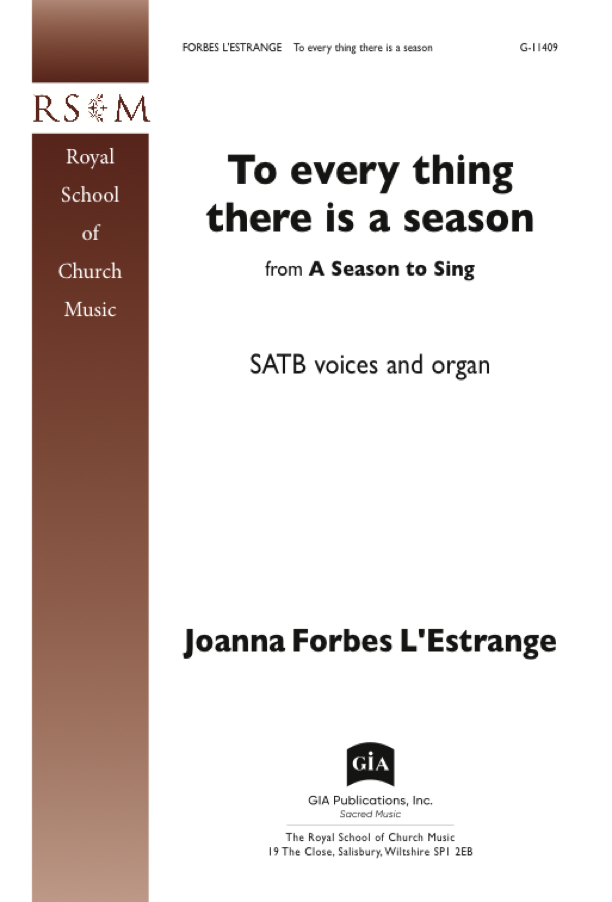
To Every Thing There Is a Season
from "A Season to Sing"
Joanna Forbes L'Estrange
Accompaniment - ["Organ"]
“To Every Thing There Is a Season” is an amalgamation of the opening and closing movements of Joanna Forbes L’Estrange’s A Season to Sing, a choral re-imagining of Vivaldi’s The Four Seasons. The composer sets the words of Ecclesiastes 3:1-8 in a quasi-Baroque style to complement Vivaldi’s music. To the final verse — ‘a time of peace’ — she adds ‘Dona nobis pacem’, thereby turning the anthem into a prayer for peace in our troubled world.
$3.00
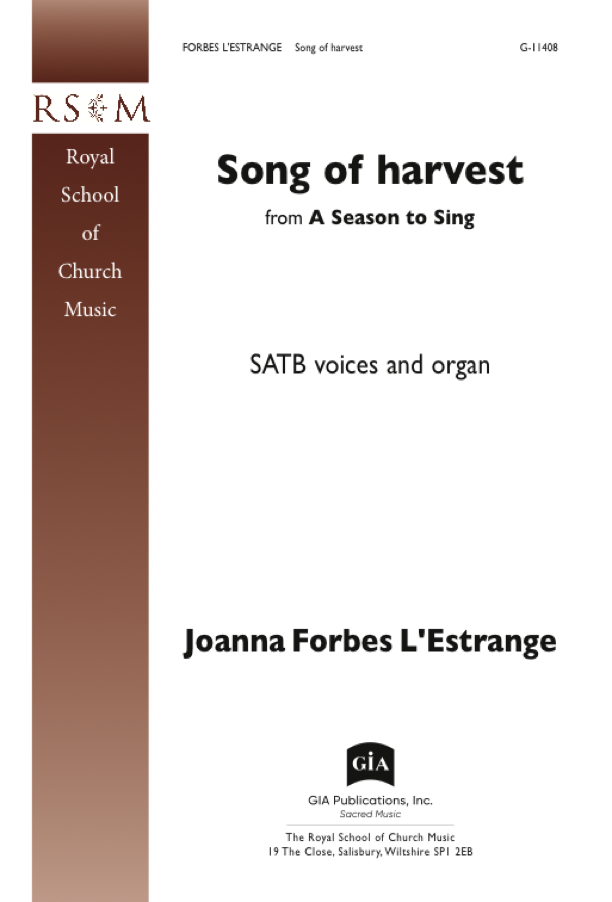
Song of Harvest
from A Season to Sing
Antonio Vivaldi, Joanna Forbes L'Estrange
Accompaniment - ["Organ"]
“Song of Harvest” is a movement from Joanna Forbes L’Estrange’s A Season to Sing—a choral re-imagining of Vivaldi’s enduring popular set of violin concertos, The Four Seasons. Here, a melody from “Autumn” is beautifully combined with a text based on Henry Alford’s hymn “Come, Ye Thankful People, Come” and Exodus 34:21 to create a festive anthem of Thanksgiving.
$3.00
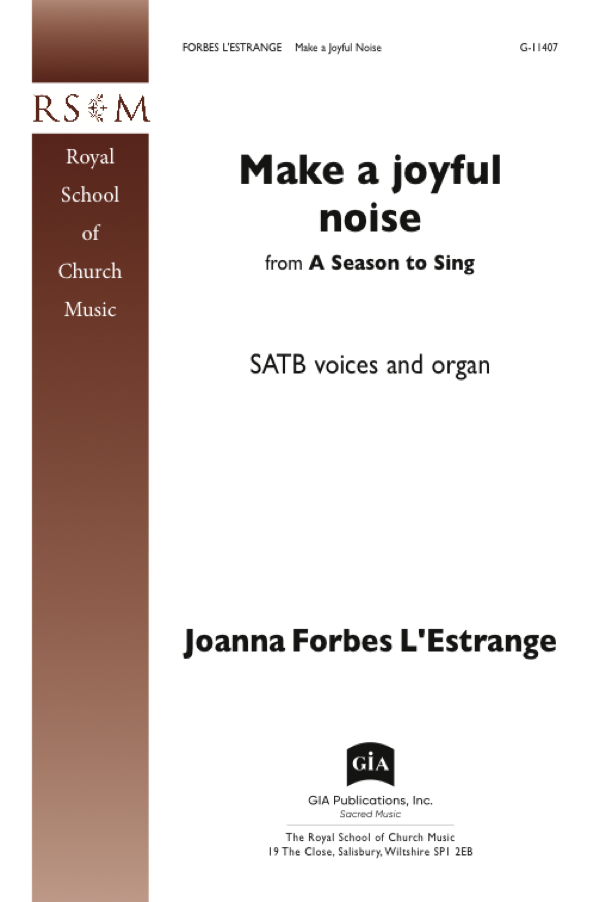
Make a Joyful Noise
from A Season to Sing
Joanna Forbes L'Estrange
Accompaniment - ["Organ"]
“Make A Joyful Noise” is a movement from Joanna Forbes L’Estrange’s A Season to Sing—a choral re-imagining of Vivaldi’s enduring popular set of violin concertos, The Four Seasons. Here, a melody from “Autumn” is joyfully combined with a text based on Psalms 100 and 150 to create a glorious choral anthem.
$3.00
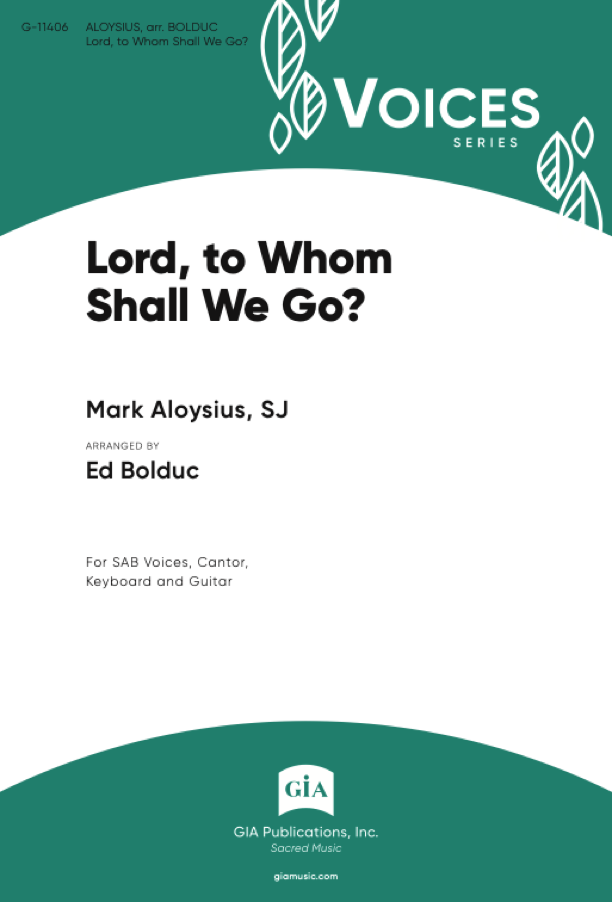
Lord, to Whom Shall We Go?
Mark Aloysius, Ed Bolduc
Style: General Anthem
Series: Voices
Level: E/M
Accompaniment - []
$2.90
RSCM Book of Psalms Songs-Full Music
Accompaniment - []
The RSCM Book of Psalm Songs is a collection of 70 tried and tested settings of 50 psalms and canticles to enrich worship across the denominations. With their combination of the ancient texts and contemporary stylish lyricism, psalm songs bridge the gap between traditional anthems and worship songs, and between choirs and instrumental groups. Congregations and singers often find them very moving and personal, identifying with the psalms’ moods and themes. Suitable for any kind of liturgy or service by soloists, choirs, singing groups and congregations, these settings are in a variety of styles. Many have optional harmony and descants._x000D_
_x000D_
These psalm songs will be enjoyed for many years by singers of all ages and are sure to find a home in your church. The RSCM Book of Psalm Songs is available in two editions: a one for cantor, choir and keyboard, and a vocal score for singers. All the settings can be accompanied by piano, keyboard or organ. Parts for guitar and melody instruments along with congregational refrains can be downloaded from the RSCM website to encourage participation by all. There is a special focus on psalms for seasons of the year and for themes and occasions. Composers include Teresa Brown, Bernadette Farrell, Marty Haugen, Philip Moore, David Ogden, Alan Smith, Christopher Walker and Paul Wellicome.
$29.95
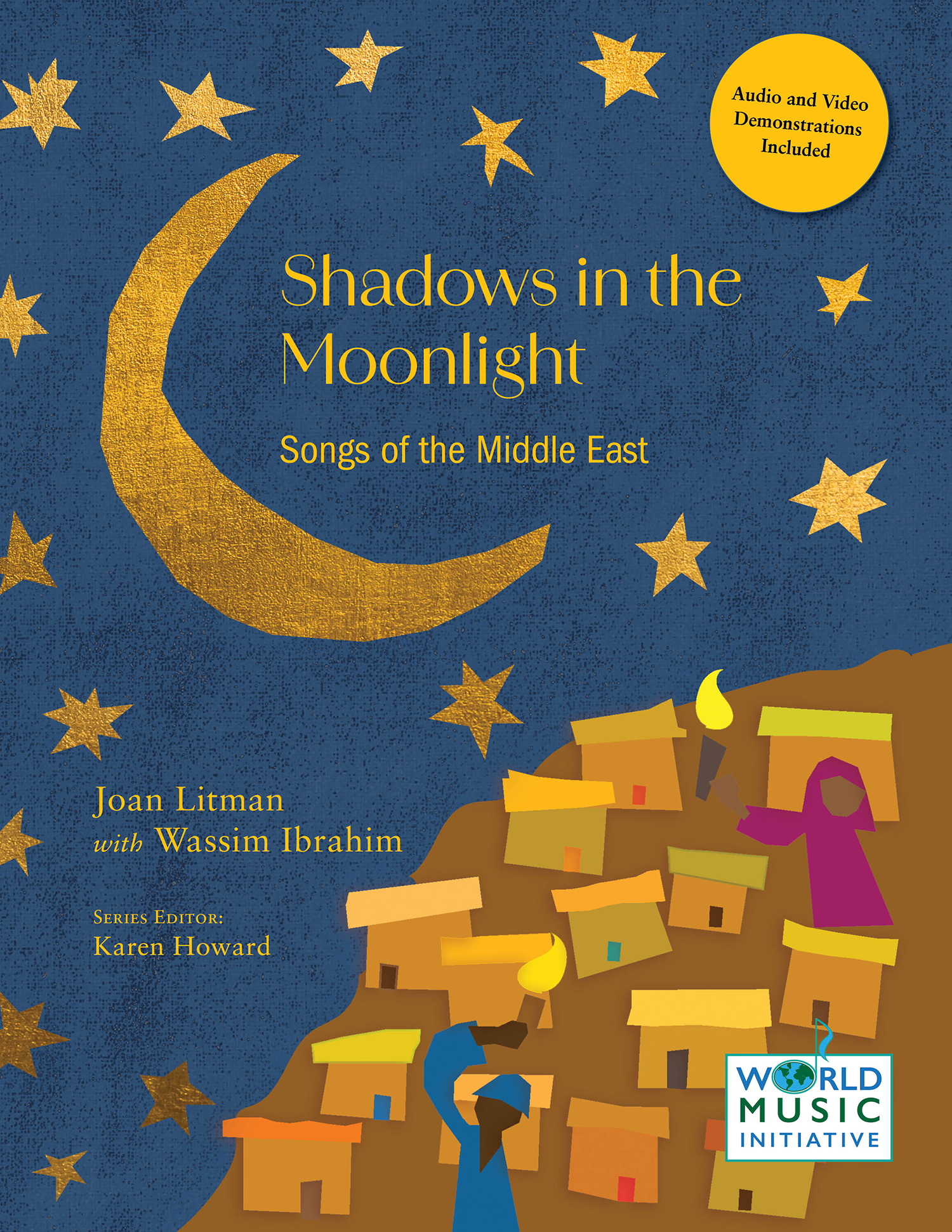
Shadows in the Moonlight
Songs of the Middle East
Joan Litman, Wassim Ibrahim, Karen Howard
Series: World Music Initiative
Accompaniment - []
Shadows in the Moonlight: Songs of the Middle East invites readers into a vibrant musical world shaped by centuries of cultural exchange along ancient caravan routes. This collection of 43 traditional songs captures the beauty and diversity of Middle Eastern music, offering students and educators an authentic, accessible resource that celebrates connection through sound._x000D_
_x000D_
Organized by language—Arabic, Persian (Farsi), Turkish, Kurdish, and Hebrew—each section begins with a brief introduction to the region and culture, followed by a collection of songs that reflect the traditions of the community._x000D_
_x000D_
As with other books in the World Music Initiative series, the authors provide music notation, English translations, and phonetic pronunciations for each song—along with online audio and video recordings that bring these melodies to life for Western audiences. Also included are contextual information, teaching considerations, and additional recommendations for picture books and films to deepen cultural understanding._x000D_
_x000D_
Rooted in the belief that music can build bridges of peace and empathy, Shadows in the Moonlight explores the heart and humanity of Middle Eastern cultures through song._x000D_
_x000D_
Joan Isaacs Litman has spent nearly five decades as a music educator and choral director in the New York City metropolitan area. Driven by her curiosity and appreciation of Middle Eastern cultures, Joan has devoted much of her career to the songs of the Middle East. She is the founding Artistic Director of Cantigas Women’s Choir, and the Mustard Seed School in Hoboken, NJ._x000D_
_x000D_
Wassim Ibrahim, a native of Damascus, Syria, is a gifted composer whose works have received enthusiastic acclaim throughout Europe, North Africa, the Middle East, and the United States. He received his PhD in Composition from the Penderecki Academy of Music in Poland, where he now teaches ethnomusicology. In 2015, he founded Chór w Kontakcie, a Krakow-based intergenerational choir specializing in global song.
$28.95
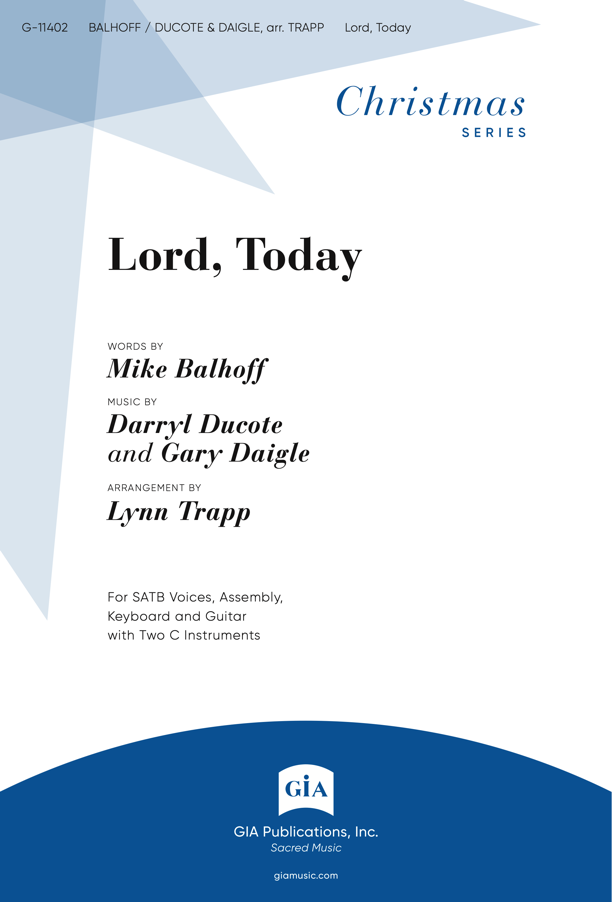
Lord, Today
Darryl Ducote, Gary Daigle, Lynn M. Trapp
Style: Advent / Christmas
Series: Christmas
Level: E/M
Accompaniment - ["Keyboard"]
$2.60
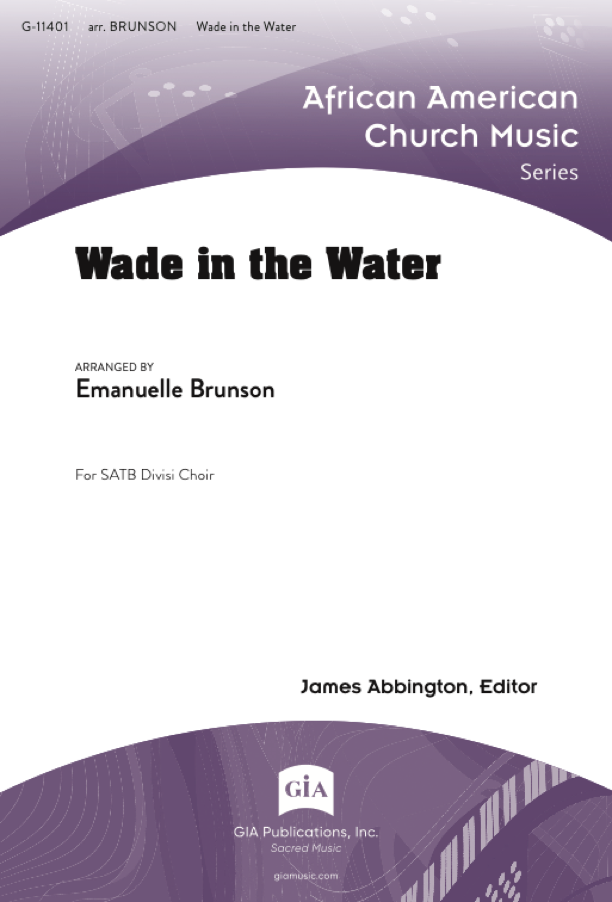
Wade in the Water
Emanuelle Brunson
Style: Concert / Festival
Series: AAASMS
Level: E/M
Accompaniment - ["Reduction"]
$2.90
Your Soul Is Song - SSA Edition
Jake Runestad
Accompaniment - []
When Germán Aguilar passed away unexpectedly in the summer of 2014, it was a huge loss to our world. Germán had a warm, kind personality and a love for life, teaching, and the people around him. He was a choral conductor, had a beautiful tenor voice, and was deeply engaged in the music community._x000D_
_x000D_
After a difficult time in his life, Germán wrote this poem — a plea to the power of song and weathering the storms of life. Germán died of a massive aneurism in the middle of a concert, while he was singing, and I can’t move beyond that image and the meaning it brings to these words. Life is not easy, and is never perfect, but there is so much beauty and joy to be found in song.
$3.99
Your Soul Is Song - SATB Edition
Jake Runestad
Accompaniment - []
When Germán Aguilar passed away unexpectedly in the summer of 2014, it was a huge loss to our world. Germán had a warm, kind personality and a love for life, teaching, and the people around him. He was a choral conductor, had a beautiful tenor voice, and was deeply engaged in the music community.
After a difficult time in his life, Germán wrote this poem — a plea to the power of song and weathering the storms of life. Germán died of a massive aneurism in the middle of a concert, while he was singing, and I can’t move beyond that image and the meaning it brings to these words. Life is not easy, and is never perfect, but there is so much beauty and joy to be found in song.
$3.99
Winter - Cello
Jake Runestad
Accompaniment - []
"Winter" is extracted from the multi-movement work “Cello Songs,” commissioned by Doug Bella and David Hunt for St. Charles Singers in memory of Doris J. Hunt._x000D_
_x000D_
On my living room wall, I have a letterpress broadside of the poem “Cello” by Dorianne Laux. Its central image is a dead tree, fallen into the arms of a living one. As years pass, it “…rubs its fallen body / against the living, building / its dead music / making its raw mark, / wearing the tough bough down / as it moans and bends, the deep / rosined bow sound of the living / shouldering the dead.”_x000D_
_x000D_
Todd Boss, a frequent collaborator of mine, has created a new text inspired by Dorianne’s poem specifically for this musical setting.
$8.99
Winter
Jake Runestad
Accompaniment - []
"Winter" is extracted from the multi-movement work “Cello Songs,” commissioned by Doug Bella and David Hunt for St. Charles Singers in memory of Doris J. Hunt. On my living room wall, I have a letterpress broadside of the poem “Cello” by Dorianne Laux. Its central image is a dead tree, fallen into the arms of a living one. As years pass, it “…rubs its fallen body / against the living, building / its dead music / making its raw mark, / wearing the tough bough down / as it moans and bends, the deep / rosined bow sound of the living / shouldering the dead.” Todd Boss, a frequent collaborator of mine, has created a new text inspired by Dorianne’s poem specifically for this musical setting._x000D_
$3.99
Wild Forces - Full Score
Jake Runestad
Accompaniment - []
“How will you ever find peace unless you yield to love?"_x000D_
_x000D_
With all of the inequality, violence, and pain in our world, I continue to dwell on the importance and impact of love — love shown to others and love shown to oneself. When considering the focus for this Seraphic Fire commission, I didn’t necessarily choose the topic of love, it was a calling._x000D_
_x000D_
I am a hoarder of poetry and one of my favorite collections is “Love Poems From God” — mystical poems by Daniel Ladinsky inspired by famous writers from around the world. This book is a composer’s dream with colorful, powerful, and succinct writings that talk of living fully, deep spirituality, self-contemplation, and love. When starting my work on this new composition, I opened Ladinsky's book to find a treasure trove of quaint parables and sage advice for us all as we seek meaning in our human condition. “The Hope of Loving” uses a selection of writings inspired by spiritual mystics throughout history to explore the idea of love and its manifestation in our lives._x000D_
_x000D_
The work begins with the string quartet playing a descending sequence of a single musical interval — the perfect fourth. This interval appears throughout the work as a musical motive but also a sign post; acting as a sort of character or embodiment of love. The string quartet, soloists, and chorus serve equal roles throughout the work in bringing these mystical words to life. In each of the six movements, I have endeavored to capture various ways we, as humans, respond to and act on our idea of love; hopefully creating opportunities for introspection and realization._x000D_
_x000D_
Love is our most valuable resource, our most precious possession, our doorway into fostering compassion. May you consider these texts and this music with an open mind and ask yourself, “to whom can I give more love in my life?” For it is through love, both given and received, that our world can change._x000D_
_x000D_
"Wild Forces" is the second movement of "The Hope of Loving" and may be performed on its own, with piano or with string quartet.
$8.99
Wild Forces
Jake Runestad
Accompaniment - []
"Wild Forces," the second movement of "The Hope of Loving," is a lively, rollicking expression of joy for the beauty in us all. To be performed with piano alone, or with string quartet, this piece is an audience favorite!
$3.99
We Can Mend the Sky - Percussion
Jake Runestad
Accompaniment - []
My sister was an English teacher at the Minnesota International Middle School in Minneapolis which provides a safe and inclusive environment for East African immigrant students to learn (many of whom are Somali). Most of these students came to the USA to escape the violent civil war that has plagued Somalia since 1991. Seeking a better life for their children, these students’ parents risked their lives to come to the USA - a valiant act of love. I wanted to tell their story through music and so I asked my sister to have her students write poems about their experiences leaving their home and coming to the USA. I received over 100 poems that contain passion, pride, emotion, and vivid stories of the sights and sounds that these young people have experienced. I sifted through these texts and found the powerful words of 14-year-old Warda Mohamed that became the backbone of the composition. Using Warda’s poem and two Somali proverbs, “We Can Mend the Sky” is a musical depiction of one’s journey as an immigrant and an affirmation of hope as we all embrace the diversity around us.
$8.99
The Secret of the Sea - Full Score (String Quartet)
Jake Runestad
Accompaniment - []
Craig Hella Johnson and KI Concerts commissioned The Secret of the Sea (2018), for choir, piano, percussion, and string quintet, which had its premiere at the Sydney Opera House in Australia on July 17, 2018. The subject of the piece was inspired by this venue’s proximity to the sea, and to compose it, Runestad searched for texts related to the sea in his own poetry collection and beyond. The resulting libretto incorporates texts by Walt Whitman, Henry Wadsworth Longfellow, H.D. (Hilda Doolittle), and the Inuit shaman Uvavnuk, and takes listeners on a dramatic musical journey. “This journey of the human spirit,” the composer writes, “questions the meaning of existence while evoking the sights and sounds of the sea.”_x000D_
_x000D_
Part I, “The Unbounded Sea,” pairs texts by Whitman and Longfellow: Whitman’s words express the unbridled joy of embarking on an ocean voyage, while Longfellow introduces the central image and title of the work: “My soul is full of longing for the secret of the sea.” In Part II, “Crash On Crash,” H.D.’s agitated language launches us into a “raging” and “furious” sea that Runestad matches with equally stormy music. Finally, Part III, “The Light that Fills the World,” presents a cultural story that expresses Inuit peoples’ intimate relationship to the sea. One evening, upon leaving her home, the Iglulik shaman Uvavnuk witnessed light come down from the sky. It entered into her and, inspired, she began to sing a song about the sea, of which the text that concludes The Secret of the Sea is a rough translation. Runestad’s music is harmonically centered around the Lydian mode—- hum the Do-Re-Mi-Fa-Sol-La-Si-Do scale starting on Fa—as well as the whole tone scale, whose expansive intervals evoke the majesty of the sea, and may bring to mind Claude Debussy’s La Mer._x000D_
_x000D_
Program note by by Leah G. Weinberg, Ph.D._x000D_
Please credit this writer in all uses of this program note.
$65.00
The Secret of the Sea
Jake Runestad
Accompaniment - []
Craig Hella Johnson and KI Concerts commissioned The Secret of the Sea (2018), for choir, piano, percussion, and string quintet, which had its premiere at the Sydney Opera House in Australia on July 17, 2018. The subject of the piece was inspired by this venue’s proximity to the sea, and to compose it, Runestad searched for texts related to the sea in his own poetry collection and beyond. The resulting libretto incorporates texts by Walt Whitman, Henry Wadsworth Longfellow, H.D. (Hilda Doolittle), and the Inuit shaman Uvavnuk, and takes listeners on a dramatic musical journey. “This journey of the human spirit,” the composer writes, “questions the meaning of existence while evoking the sights and sounds of the sea.”_x000D_
_x000D_
Part I, “The Unbounded Sea,” pairs texts by Whitman and Longfellow: Whitman’s words express the unbridled joy of embarking on an ocean voyage, while Longfellow introduces the central image and title of the work: “My soul is full of longing for the secret of the sea.” In Part II, “Crash On Crash,” H.D.’s agitated language launches us into a “raging” and “furious” sea that Runestad matches with equally stormy music. Finally, Part III, “The Light that Fills the World,” presents a cultural story that expresses Inuit peoples’ intimate relationship to the sea. One evening, upon leaving her home, the Iglulik shaman Uvavnuk witnessed light come down from the sky. It entered into her and, inspired, she began to sing a song about the sea, of which the text that concludes The Secret of the Sea is a rough translation. Runestad’s music is harmonically centered around the Lydian mode—- hum the Do-Re-Mi-Fa-Sol-La-Si-Do scale starting on Fa—as well as the whole tone scale, whose expansive intervals evoke the majesty of the sea, and may bring to mind Claude Debussy’s La Mer._x000D_
_x000D_
Program note by by Leah G. Weinberg, Ph.D._x000D_
Please credit this writer in all uses of this program note.
$6.99
The Peace of Wild Things
Jake Runestad
Accompaniment - []
Winner of the 2014 Nathan Davis Prize in Composition._x000D_
_x000D_
The words of poet, activist, community-builder, and farmer, Wendell Berry, serve as the inspiration for “The Peace of Wild Things.” Berry’s appreciation for the larger circle of existence is evident in this text that explores humanity’s relationship with the earth. When we are so caught up in our human-centered existence, Berry reminds us how the wild things around us “do not tax their lives with forethought of grief.” My attempt to illuminate Berry’s words begins with swells of anxious, clustered harmony that give way to the basses, the lowest and darkest voices of the choir, who chant the opening lines, “When despair for the world grows in me…” Throughout the work, the musical gestures and harmonies rise and lighten until the highest voice, the sopranos, close the piece on the word “free.” The piano provides an earthly palette throughout, underscoring the scene at the edge of a mountain lake.
$3.99
The Lighthouse Keeper - Full Score
Jake Runestad
Accompaniment - []
The words of poet, activist, community-builder, and farmer, Wendell Berry, serve as the inspiration for “The Peace of Wild Things.” Berry’s appreciation for the larger circle of existence is evident in this text that explores humanity’s relationship with the earth. When we are so caught up in our human-centered existence, Berry reminds us how the wild things around us “do not tax their lives with forethought of grief.” My attempt to illuminate Berry’s words begins with swells of anxious, clustered harmony that give way to the basses, the lowest and darkest voices of the choir, who chant the opening lines, “When despair for the world grows in me…” Throughout the work, the musical gestures and harmonies rise and lighten until the highest voice, the sopranos, close the piece on the word “free.” The piano provides an earthly palette throughout, underscoring the scene at the edge of a mountain lake._x000D_
_x000D_
The full score does not include instrument parts. Instrument part rental is available here: https://jakerunestad.com/pages/rental-request
$65.00
The Lighthouse Keeper - Choral Score
Jake Runestad
Accompaniment - []
“The Lighthouse Keeper†is a series of vignettes capturing a life journey of joy, beauty, loss, and renewal. From a friend's death on Middle Palisade Peak in the Sierra Nevada mountains, to the excitement of a roadtrip to Joshua Tree National Park, to a magical midnight swim in the Spanish Mediterranean, to the loss of a loved one spiraling into depression and despair at Point Reyes National Seashore, to celebrating new beginnings at Yosemite National Park, this work is a deeply personal, yet powerfully universal expression of a life shared in friendship. "The Lighthouse Keeper" reminds that all we really have, when all is said and done, is each other.
$8.99
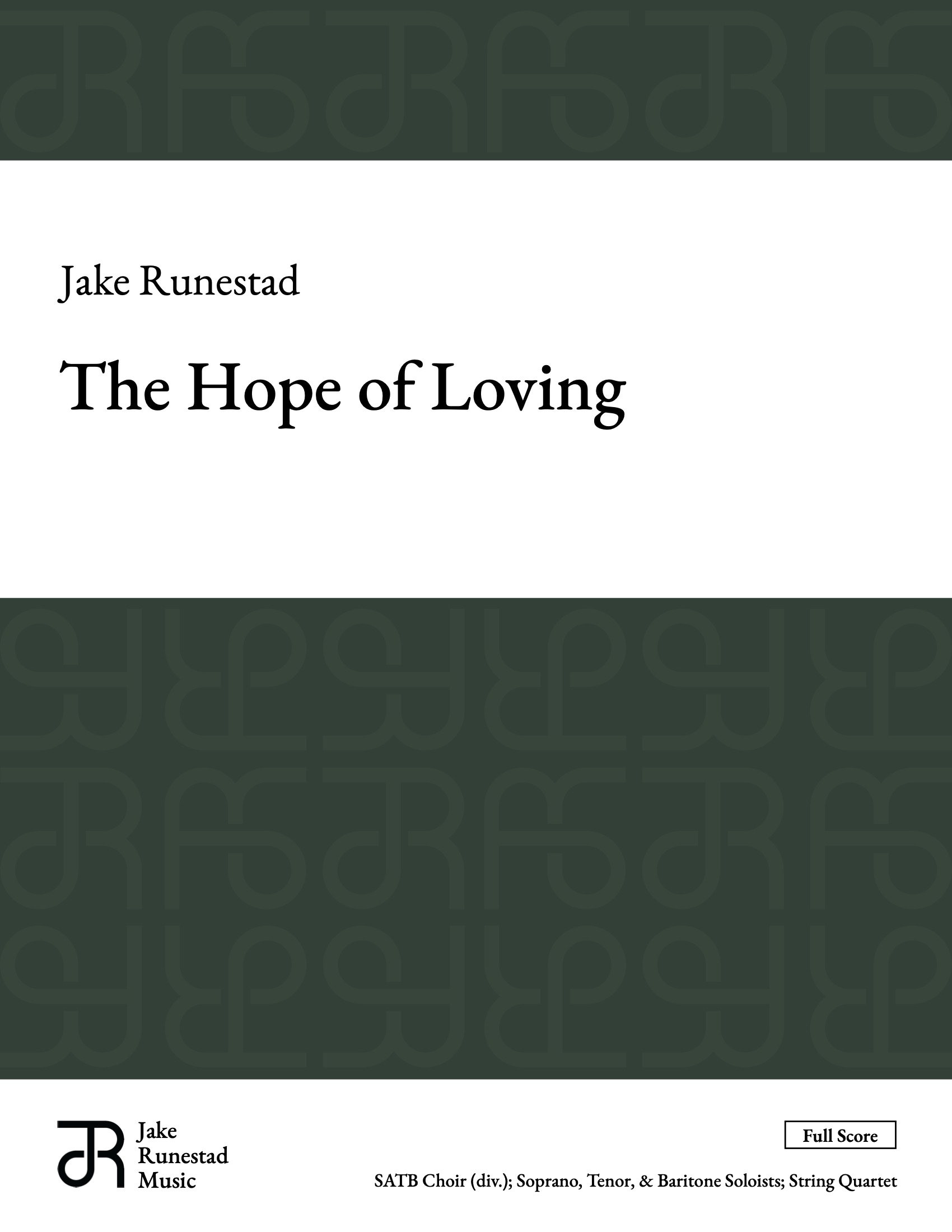
The Hope of Loving - Full Score
Jake Runestad
Accompaniment - []
“How will you ever find peace unless you yield to love?"_x000D_
_x000D_
With all of the inequality, violence, and pain in our world, I continue to dwell on the importance and impact of love — love shown to others and love shown to oneself. When considering the focus for this Seraphic Fire commission, I didn’t necessarily choose the topic of love, it was a calling._x000D_
_x000D_
I am a hoarder of poetry and one of my favorite collections is “Love Poems From God” — mystical poems by Daniel Ladinsky inspired by famous writers from around the world. This book is a composer’s dream with colorful, powerful, and succinct writings that talk of living fully, deep spirituality, self-contemplation, and love. When starting my work on this new composition, I opened Ladinsky's book to find a treasure trove of quaint parables and sage advice for us all as we seek meaning in our human condition. “The Hope of Loving” uses a selection of writings inspired by spiritual mystics throughout history to explore the idea of love and its manifestation in our lives._x000D_
_x000D_
The work begins with the string quartet playing a descending sequence of a single musical interval — the perfect fourth. This interval appears throughout the work as a musical motive but also a sign post; acting as a sort of character or embodiment of love. The string quartet, soloists, and chorus serve equal roles throughout the work in bringing these mystical words to life. In each of the six movements, I have endeavored to capture various ways we, as humans, respond to and act on our idea of love; hopefully creating opportunities for introspection and realization._x000D_
_x000D_
Love is our most valuable resource, our most precious possession, our doorway into fostering compassion. May you consider these texts and this music with an open mind and ask yourself, “to whom can I give more love in my life?” For it is through love, both given and received, that our world can change.
$65.00