

Foundling Hospital Anthem HWV 268 (Part - Viola)
1753 Version
Handel, George Frideric / Blaut, Stephan
Category: Orchestra
$31.00*
* Price is approximate. Learn more
Foundling Hospital Anthem HWV 268 (Part - 2. Violin)
1753 Version
Handel, George Frideric / Blaut, Stephan
Category: Orchestra
$31.00*
* Price is approximate. Learn more
Foundling Hospital Anthem HWV 268 (Part - 1. Violin)
1753 Version
Handel, George Frideric / Blaut, Stephan
Category: Orchestra
$31.00*
* Price is approximate. Learn more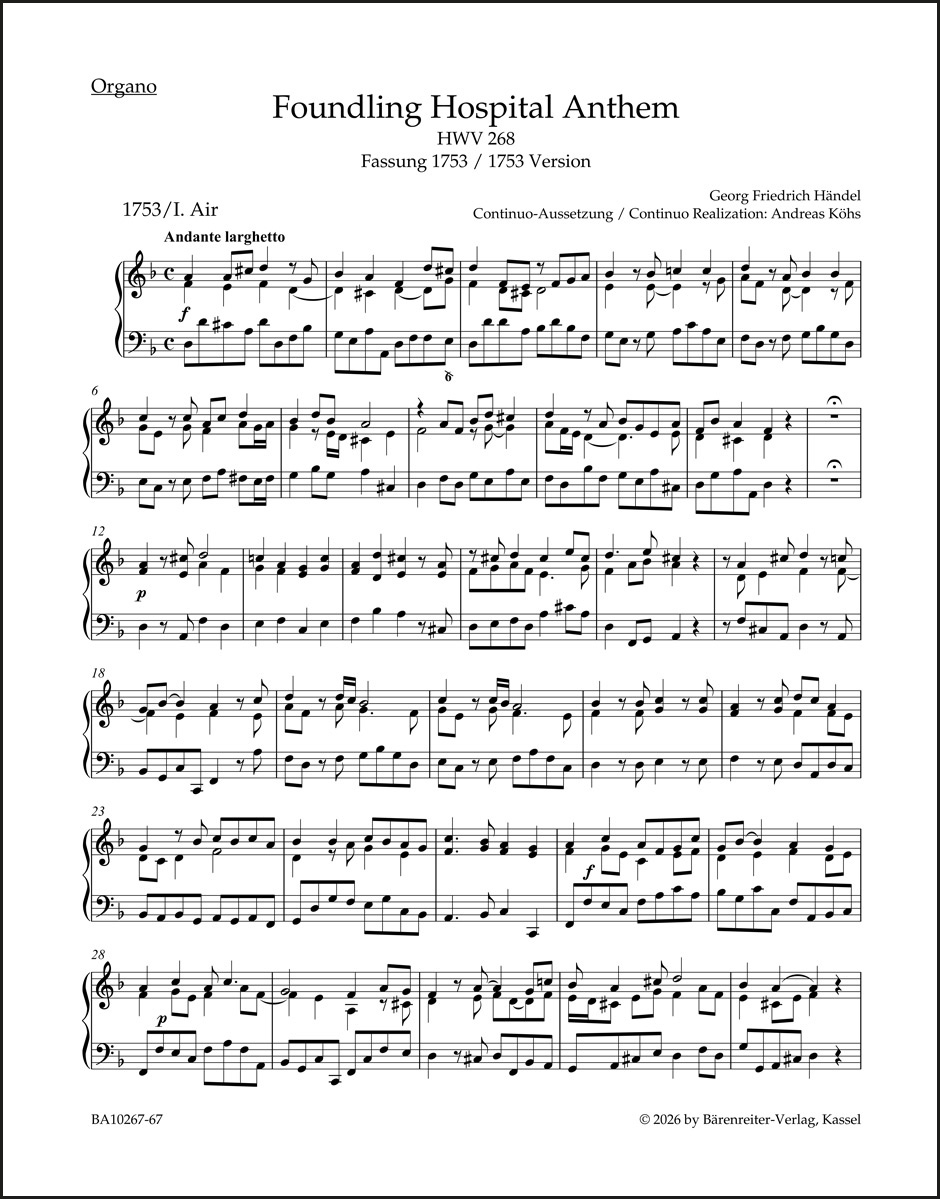
Foundling Hospital Anthem HWV 268 (Part - Organ)
1753 Version
Handel, George Frideric / Köhs, Andreas / Blaut, Stephan
Category: Orchestra
$51.00*
* Price is approximate. Learn more
Foundling Hospital Anthem HWV 268 (Wind set, Urtext edition)
1753 Version
Handel, George Frideric / Blaut, Stephan
Category: Orchestra
$52.00*
* Price is approximate. Learn more
Foundling Hospital Anthem HWV 268 (Score, Urtext edition)
1753 Version
Handel, George Frideric / Blaut, Stephan
Category: Orchestra
George Frideric Handel’s anthem “Blessed are they that consider the poor” was first performed in 1749 at a benefit concert for the Foundling Hospital orphanage and has since been known by this name. The vocal texts of the original four movements are taken from the Old and New Testaments (Book of Psalms, Prophets, Epistles of Paul). As is often the case with occasional works, the composer drew on music from earlier compositions in all movements – the fourth chorus, for example, is identical to the “Hallelujah” chorus from the “Messiah”. For a later performance in 1753, Handel substantially expanded the work by three movements and revised parts of the first version. This later version constitutes an independent and arguably more appealing version of the anthem.
This Urtext edition based on the “Halle Handel Edition” offers the first scholarly-critical edition of the musical text of the 1753 version.
$90.00*
* Price is approximate. Learn more
Anthem on the Peace HWV 266 (267) (Choral score, Urtext edition)
Handel, George Frideric / Blaut, Stephan
Category: Choral
The anthem “How beautiful are the feet”, also known as “Anthem on the Peace”, was first performed by the London Chapel Royal in 1749 at a thanksgiving service marking the Peace of Aachen, which ended the War of the Austrian Succession. At the subsequent festive ceremony Handel’s “Music for the Royal Fireworks” also received its premiere. As was often the case with occasional works, the composer drew on texts and music from earlier compositions for all four movements. Thus the “Anthem on the Peace” contains several parts from the “Messiah”, but also from other anthems and the “Occasional Oratorio”. Handel therefore did not prepare a separate autograph for this work.
This Urtext edition based on the “Halle Handel Edition” offers the first scholarly-critical edition of the musical text of the version probably performed at the premiere, supplemented by two variant movements.
$34.00*
* Price is approximate. Learn more
Anthem on the Peace HWV 266 (267) (Vocal Score, Urtext edition)
Handel, George Frideric / Köhs, Andreas / Blaut, Stephan
Category: Choral
The anthem “How beautiful are the feet”, also known as “Anthem on the Peace”, was first performed by the London Chapel Royal in 1749 at a thanksgiving service marking the Peace of Aachen, which ended the War of the Austrian Succession. At the subsequent festive ceremony Handel’s “Music for the Royal Fireworks” also received its premiere. As was often the case with occasional works, the composer drew on texts and music from earlier compositions for all four movements. Thus the “Anthem on the Peace” contains several parts from the “Messiah”, but also from other anthems and the “Occasional Oratorio”. Handel therefore did not prepare a separate autograph for this work.
This Urtext edition based on the “Halle Handel Edition” offers the first scholarly-critical edition of the musical text of the version probably performed at the premiere, supplemented by two variant movements.
$39.00*
* Price is approximate. Learn more
Anthem on the Peace HWV 266 (267) (Part - Basses)
Handel, George Frideric / Blaut, Stephan
Category: Orchestra
$26.00*
* Price is approximate. Learn more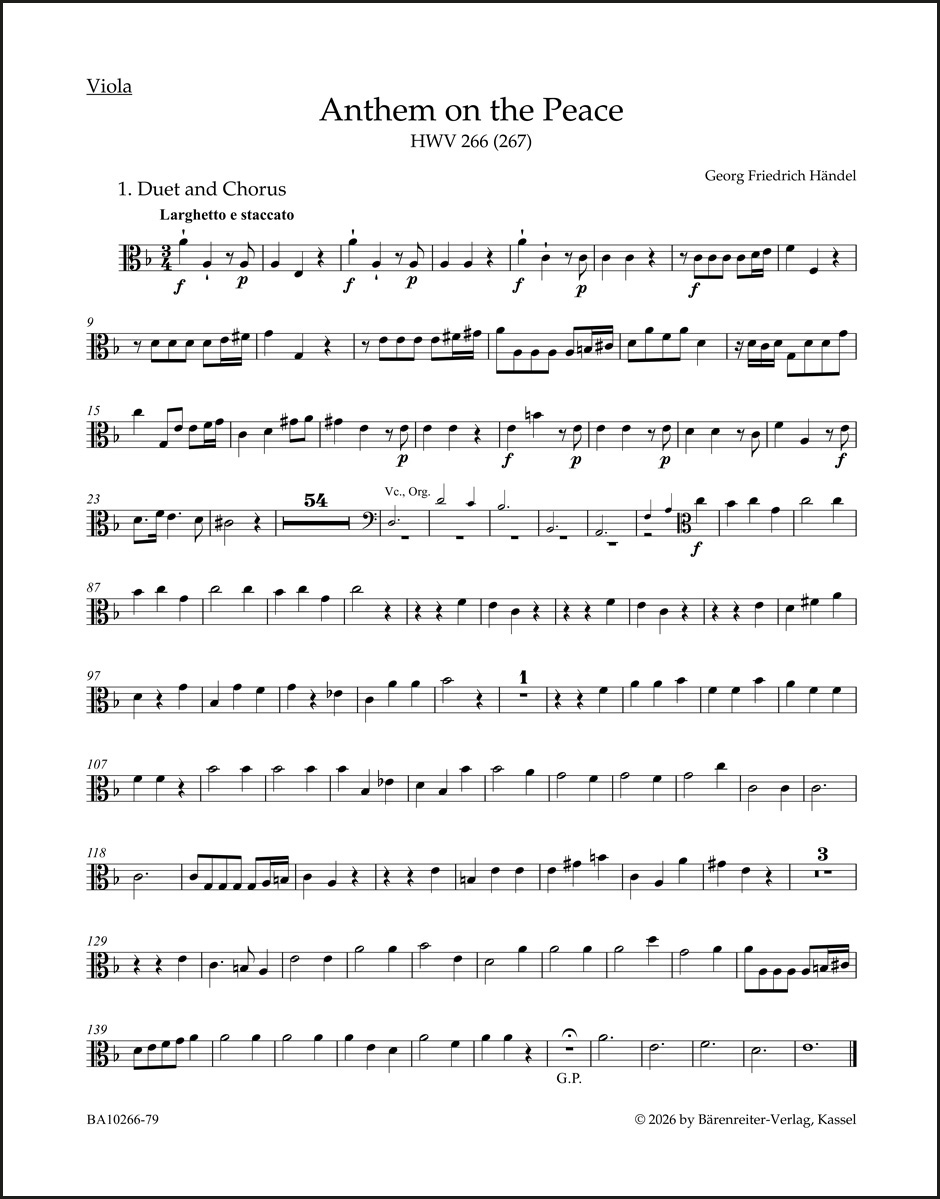
Anthem on the Peace HWV 266 (267) (Part - Viola)
Handel, George Frideric / Blaut, Stephan
Category: Orchestra
$26.00*
* Price is approximate. Learn more
Anthem on the Peace HWV 266 (267) (Part - 2. Violin)
Handel, George Frideric / Blaut, Stephan
Category: Orchestra
$26.00*
* Price is approximate. Learn more
Anthem on the Peace HWV 266 (267) (Part - 1. Violin)
Handel, George Frideric / Blaut, Stephan
Category: Orchestra
$26.00*
* Price is approximate. Learn more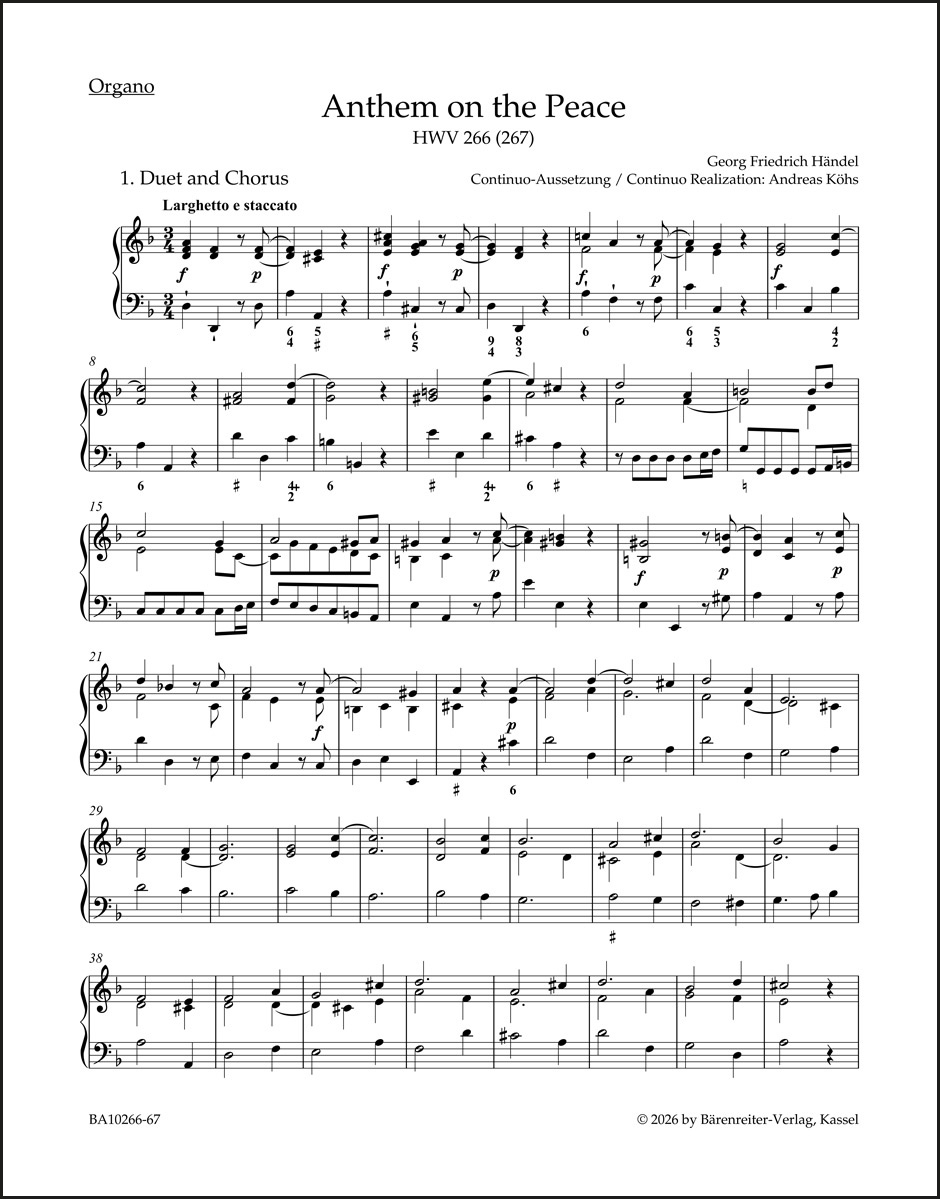
Anthem on the Peace HWV 266 (267) (Part - Organ)
Handel, George Frideric / Köhs, Andreas / Blaut, Stephan
Category: Orchestra
$54.00*
* Price is approximate. Learn more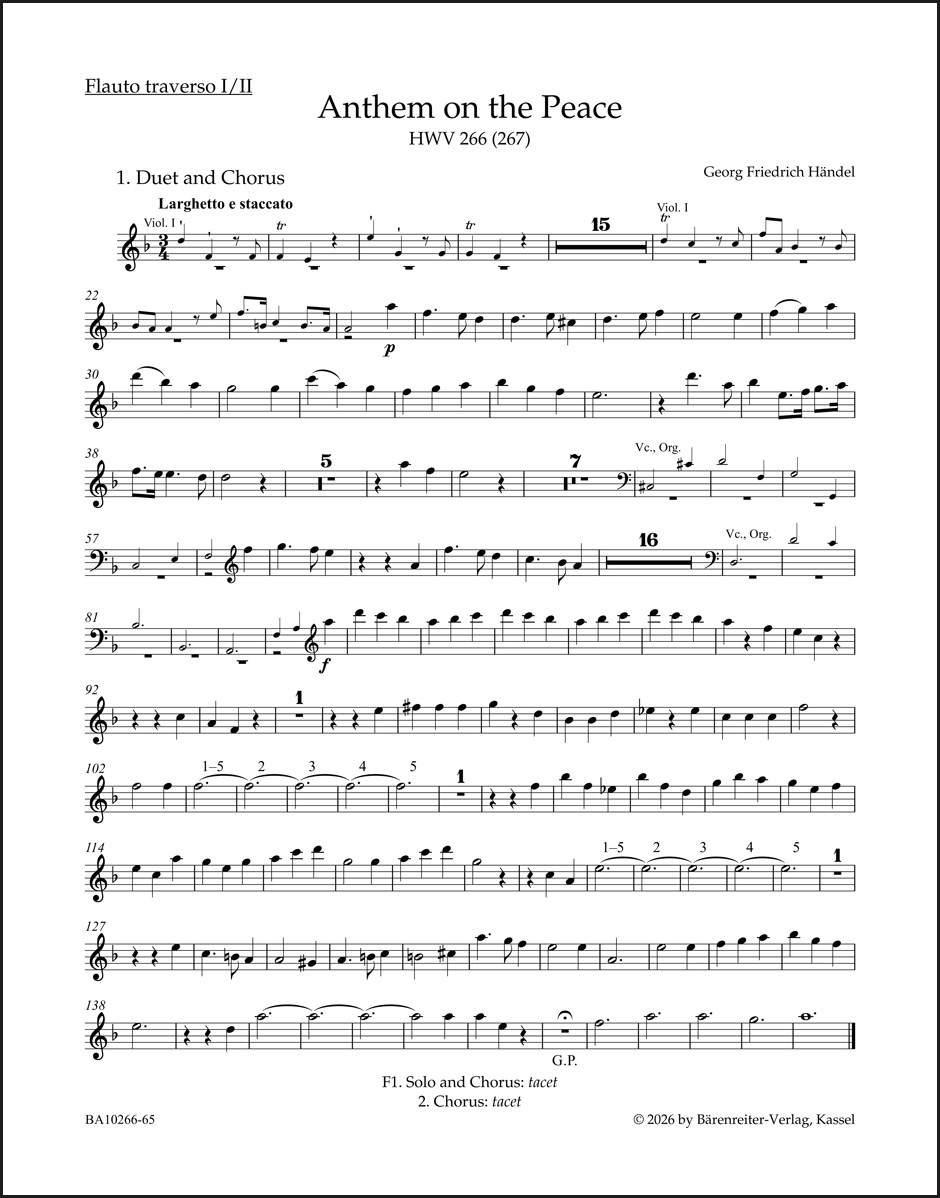
Anthem on the Peace HWV 266 (267) (Wind set, Urtext edition)
Handel, George Frideric / Blaut, Stephan
Category: Orchestra
$100.00*
* Price is approximate. Learn more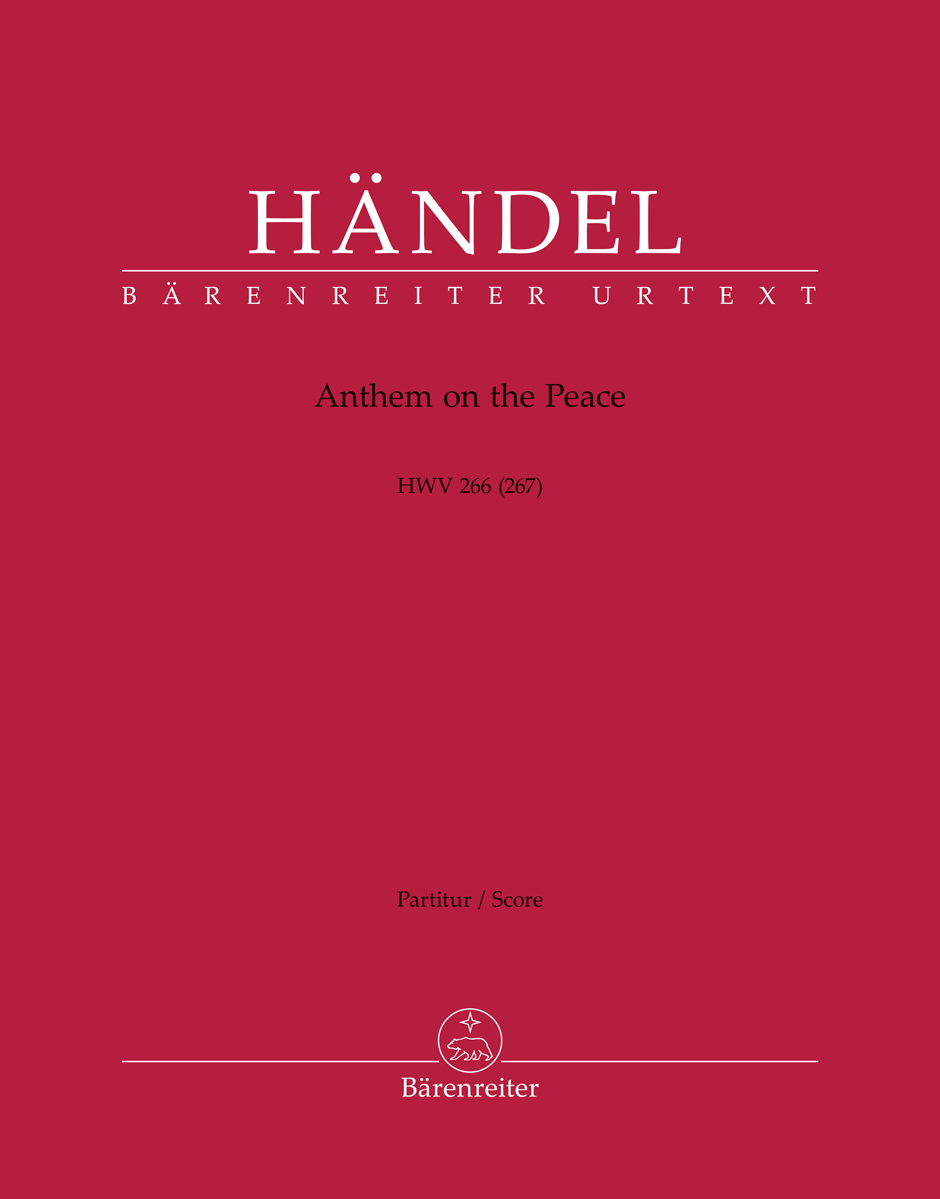
Anthem on the Peace HWV 266 (267) (Score, Urtext edition)
Handel, George Frideric / Blaut, Stephan
Category: Orchestra
The anthem “How beautiful are the feet”, also known as “Anthem on the Peace”, was first performed by the London Chapel Royal in 1749 at a thanksgiving service marking the Peace of Aachen, which ended the War of the Austrian Succession. At the subsequent festive ceremony Handel’s “Music for the Royal Fireworks” also received its premiere. As was often the case with occasional works, the composer drew on texts and music from earlier compositions for all four movements. Thus the “Anthem on the Peace” contains several parts from the “Messiah”, but also from other anthems and the “Occasional Oratorio”. Handel therefore did not prepare a separate autograph for this work.
This Urtext edition based on the “Halle Handel Edition” offers the first scholarly-critical edition of the musical text of the version probably performed at the premiere, supplemented by two variant movements.
$90.00*
* Price is approximate. Learn more
Trio for Violin, Violoncello and Piano (Score, Part, Urtext edition)
after the Sextet in G major op. 36
Brahms, Johannes / Kirchner, Theodor / Signer, Emanuel
Category: Instrumental
After Johannes Brahms’ String Sextet in G major op. 36 was published in 1866, the publisher Simrock issued arrangements of the work for other instrumentations, as was customary at the time. In 1883, a version for piano trio was published, arranged by Theodor Kirchner (1823–1903), who himself was a composer and friend of Brahms. Unlike other versions commissioned by the publisher – such as the one for piano by Robert Keller – Kirchner’s met with Brahms’ approval, as can be seen from a letter to Simrock: “The trios [after op. 18 and 36] give me extraordinary pleasure! If the idea was yours, then I congratulate you, but Kirchner has also realized it magnificently.”
For this first Urtext edition of Kirchner’s arrangement of Brahms’ op. 36, the engraver’s copy of the autograph of the slow movement was critically evaluated alongside the main source – the score and the parts of the first edition.
$85.00*
* Price is approximate. Learn more
Lieder Low Voice (Volume 11) (Singing Score, Urtext edition)
Schubert, Franz / Dürr, Walther
Category: Vocal
Edition based on the New Schubert Edition
$80.00*
* Price is approximate. Learn more
Lieder Medium Voice (Volume 11) (Singing Score, Urtext edition)
Schubert, Franz / Dürr, Walther
Category: Vocal
Edition based on the New Schubert Edition
$80.00*
* Price is approximate. Learn more
Les Fêtes de Ramire RCT 40 (Complete edition, Score, Urtext edition)
Ballet in one act
Rameau, Jean-Philippe / Rousseau, Jean-Jacques / Voltaire / Dubruque, Julien
Category: Orchestra
This work tells the love story between Fatime, accused of murdering her father, and the king’s son Ramire, who is in love with her and frees her from the captivity of his father Alphonse, the King of Castile.
This opera in the form of a one-act ballet was only performed once on 22 December 1745 in Versailles and is one of Rameau's lesser-known works. It has only been performed again in the recent past.
The commission for “Les Fêtes de Ramire” did not go to Rameau himself, but to Jean-Jacques Rousseau. Nevertheless, the opera was based on Rameau's comédie-ballet “La Princess de Navarre”, which had been performed just a few months earlier and whose libretto was written by Voltaire, who shortened it for “Les Fêtes de Ramire”. Rousseau added the overture and new transitions to the work. Although, according to Rousseau, all the changes were reviewed by Rameau at the last minute, he did not have enough time to compose new music.
Voltaire himself described his own libretto as ‘wretched’ and the few minutes of music by Rousseau have mainly curiosity value, however, the density of outstanding compositions by Rameau, many of which were later incorporated into his other works, makes a performance well worthwhile.
For more information, please see:
https://www.takte-online.de/en/search-result/article/artikel/kann-das-gutgehen-liebe-zwischen-feinden-in-rameaus-les-fetes-de-ramire/index.htm
$295.00*
* Price is approximate. Learn more
Notes (Accessories)
The Musician's Choice
Category: Music Accessories
Bärenreiter notebook with a cover in Beethoven aubergine; With musical staves on the left side and writing lines on the right side
$2.00*
* Price is approximate. Learn more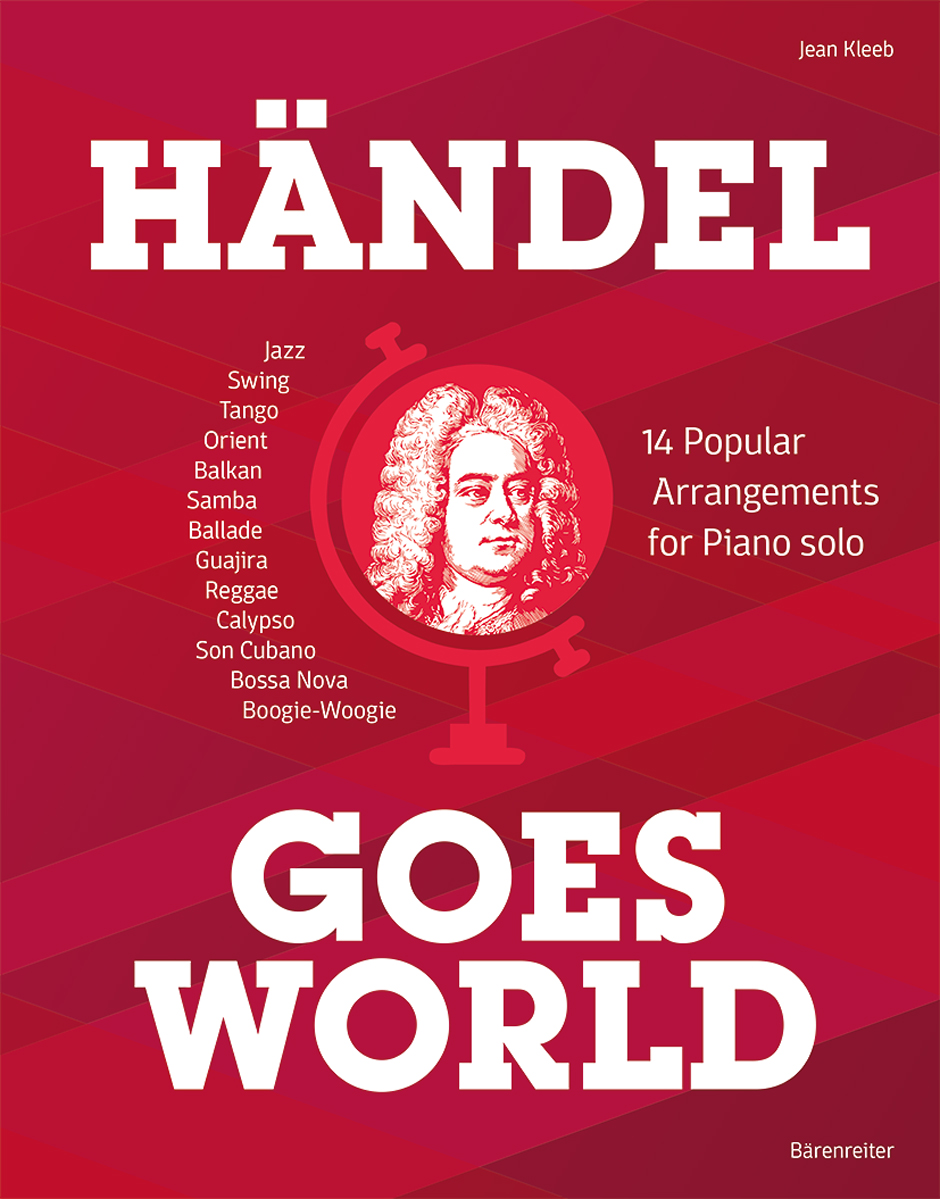
Händel goes World (Performance score)
14 Arrangements for Piano solo
Kleeb, Jean
Category: Instrumental
Jean Kleeb places Handel's work in an intercultural dialogue, inspired by musical styles from around the world. His piano arrangements unfold a musical journey filled with rhythm, imagination and stylistic diversity: from classical and romantic music through jazz, ragtime, Caribbean, tango, salsa, samba, bossa nova, Balkan music, African and oriental sounds, all the way to minimal music and pop. For example, the famous "Hallelujah" chorus resounds in a reggae version while the "Sarabande" appears in a jazzy light. The pieces encourage a creative and playful approach to Handel's motifs and are equally suitable for concerts and teaching.
$43.00*
* Price is approximate. Learn more
St. Matthew Passion TVWV 5:43 "Herr, stärke mich, dein Leiden zu bedenken" (1758) (Edition of selected works, Score, Urtext edition)
Telemann, Georg Philipp / Glimpf, Hans-Peter / Hirschmann, Wolfgang
Category: Instrumental
The St Matthew Passion of 1758 exemplifies several aspects of Georg Philipp Telemann’s late Passion writing: his evolving recitative style in the 1750s, the sometimes considerable abridgements of the Gospel texts, the use of new chorale texts – including those by Christian Fürchtegott Gellert and Christlob Mylius – and the division of the Evangelist part between two singers. Telemann also reused the biblical recitatives and turba choruses from this Passion in two later Passions, a technique he generally employed in his late Passions and which can be traced here in an exemplary manner.
The source situation is favourable, as a Hamburg set of parts by Telemann's principal copyist Schieferlein exists in addition to a copy of the full score by Georg Michael Telemann. This means that the colla-parte parts and the underlying texts have been preserved in their entirety; only one original figured organ part is missing.
The foreword addresses all these aspects in meticulous detail and also discusses performance practice issues at length. It furthermore documents the chorale texts and melodies. The volume contains a complete facsimile of the Passion text, selected illustrations from the musical sources, the Critical Report and the music score with a concise appendix. It provides a broad and solid foundation for research on Telemann as a church composer; for performers it makes accessible a major work from Telemann’s late creative period.
$455.00*
* Price is approximate. Learn more
Armide (Vocal Score, Urtext edition)
Drame héroïque in five acts
Gluck, Christoph Willibald / Sommer, Jürgen / Quinault, Philippe / Hortschansky, Klaus
Category: Choral
The episode about Armida from Torquato Tasso’s epic poem “La Gerusalemme liberata” (1575) has been one of the most popular opera subjects since the 17th century, inspiring numerous composers including Lully, Haydn, Rossini and Dvorák to set it to music. Gluck’s “Armide”, which was successfully premiered in Paris in 1777, is the third opera the composer wrote for the Académie Royale de Musique.
The beautiful sorceress Armide holds the crusader Renaud captive on her island. After the brave hero is initially unimpressed by Armide’s charms, the two eventually fall in love. Only when Renaud is reminded by the other knights of his crusading vows does he abandon the desperate Armide, whereupon she curses the faithless one and dies under the rubble of her palace which has been destroyed by demons.
Intimate monologues alternate with large choral and ballet scenes. The characterisation of the individuals is musically finely differentiated. In stark contrast to the pastoral moments are the sudden dramatic entries of the supernatural, for example the appearance of personified hatred and the spirits from hell.
$120.00*
* Price is approximate. Learn more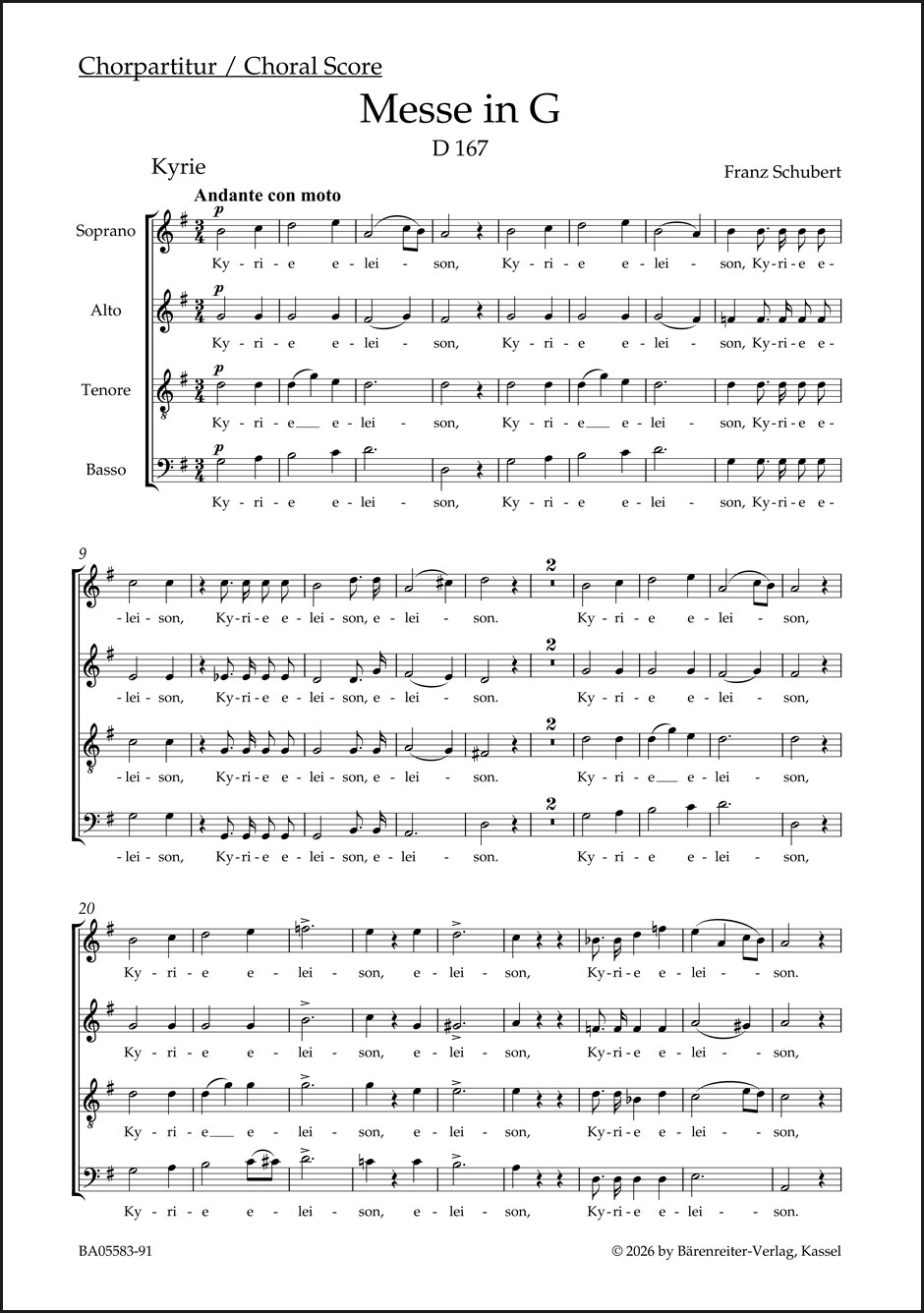
Mass in G major D 167 (Choral score, Urtext edition)
Second version
Schubert, Franz / Martin, Christine
Category: Choral
Franz Schubert composed the Mass in G major D 167 in March 1815. Only six months earlier, he made his public debut as a composer with his first Mass in F major D 105. Although no specific occasion for the composition of the second mass is known, it was most likely written for Schubert’s home parish in Lichtental (now a district of Vienna), where it was also first performed.
The original version of the Mass in G major was intended for string instruments only. Shortly afterwards, however, Schubert added trumpets and timpani ad libitum in a revised second version, which also forms the basis of this edition. The expanded instrumentation was probably intended for a festive church occasion – possibly one of the Easter days of 1815.
$17.50*
* Price is approximate. Learn more
Mass in G major D 167 (Vocal Score, Urtext edition)
Second version
Schubert, Franz / Köhs, Andreas / Martin, Christine
Category: Choral
Franz Schubert composed the Mass in G major D 167 in March 1815. Only six months earlier, he made his public debut as a composer with his first Mass in F major D 105. Although no specific occasion for the composition of the second mass is known, it was most likely written for Schubert’s home parish in Lichtental (now a district of Vienna), where it was also first performed.
The original version of the Mass in G major was intended for string instruments only. Shortly afterwards, however, Schubert added trumpets and timpani ad libitum in a revised second version, which also forms the basis of this edition. The expanded instrumentation was probably intended for a festive church occasion – possibly one of the Easter days of 1815.
$30.00*
* Price is approximate. Learn more